
I’m often asked how I come up with a topic for my writing, followed by how I narrow down the possibilities. I have to admit, sometimes it’s just a random thought that pops into my head. Other times I draw on an experience.
I’ve also learned a few techniques along the way to draw out a topic and narrow it down.
1. Mind mapping
Mind mapping or topic mapping is a technique used to explore a topic visually. The process starts by writing an idea in the centre of a page and drawing a circle around it. As you think of related topics, you write them down and connect them with a line. This process helps you draw out ideas for your writing. If old fashion handwriting isn’t your thing, there is an endless number of mind mapping apps available online.
I used mind mapping to work out a speech on my experience hiking over the La Cloche Mountains, a range of mountains in Northern Ontario. As an inexperienced backwoods hiker, I had a lot to talk about!
2. Brainstorming
Brainstorming is one of my favourite techniques, although I call it brain dumping. You can do it alone or with a group. You’ll find it especially helpful when you’re trying to find a name for a new product or process, but it can also work when you’re trying to connect ideas for your writing.
Brainstorming starts by writing down whatever comes to mind related to the topic or objective. No idea is a bad idea when you’re brainstorming. And, don’t worry, you’ll have a chance to narrow down your list when you’re done and scratch off any ideas that just won’t work.
As you move along, you’ll start to notice associations or ideas that connect your thoughts. For example, if your ideas evolve around food experiences and you’ve jotted down salads, veggies, summer salads, low carb treats, etc., you might add “healthy eating” as a connecting thought. Later, when you’re narrowing down your list, underline or circle the thoughts that resonate the strongest with you and those you might want to explore further.
3. Freewriting
I once purchased a ‘how to’ guide to learn how to write a book. I believe we all have a book in us or a story we want to tell. The writer described freewriting as a first step after your planning. The guide suggests setting a timer and then writing whatever thoughts pop into your head. I tried this on a train trip to the East Coast. I set the timer for 20 minutes and let the words flow! You’ll be surprised how much ground you can cover (with your writing).
Of course, your writing will be riddled with typos, poor sentence structure and repetition. Don’t worry. You’ll have a chance to make it all right later. The objective is to write!
Narrowing down your topic
These writing tricks should provide you with a number of topics or ideas to choose from and content to go with it. Now’s the time to narrow down those ideas to two or three key messages or takeaways. In some cases, if you’re making a presentation, for example, you’re introducing a new process at a business meeting, you may have a time limit to abide by.
I belong to a Toastmasters group. The time assigned to each speech is five to seven minutes. This means, I need to narrow down my topic to the most important topic or theme.
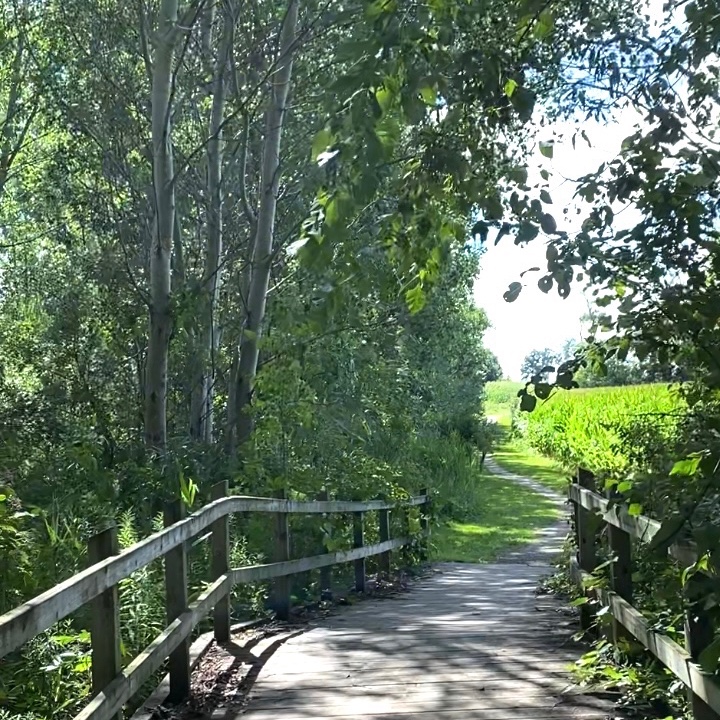
If I’m writing about my love for hiking, I may not have time to describe every experience. My task is to narrow down the topic. I might focus on my top three hiking tips, or my favourite hiking spot and why.
However you come up with your writing topics, let it be something you enjoy writing about. Challenge yourself to find the topic that’s relevant to your audience, entertains or inspires.
Do you have a topic in your head? How are you going to approach your writing?
 My writing booth.