
Running a small business with its highs and lows can feel like you’re carrying the weight of the world on your shoulders. If you’re feeling the squeeze, you aren’t alone—but you also don’t have to stay stuck in that “survival mode” headspace.
Here are four practical ways to reduce the stress and get back to enjoying what you do.
1. Let go of the reins—delegate
Most of us started our businesses because we care about the details, but we’re only one person. As your business grows, so does the number of hats you’ll wear. The secret to staying sane is delegation. But here’s the kicker: you have to actually trust the person you’re handing the task to. If you’re hovering over their shoulder, you’re still doing the work mentally. Let go, trust their talent and reclaim your headspace for the big-picture stuff.
2. Take it one small win at a time
When you look at your three-year plan, it’s easy to feel overwhelmed. Instead of staring at the mountain, just look at the next few steps. Break your giant goals into tiny, bite-sized tasks. There is something incredibly satisfying about crossing a small item off a list. Those little wins build momentum and prove that you’re moving forward, even on the tough days.
3. Find your people
Isolation is a huge stress-multiplier. You need a circle of people you can actually talk to—not just for networking, but for honest brainstorming. Whether it’s a formal mentor or a group of fellow local owners, having people to bounce ideas off of is a lifesaver. Often, just saying a problem out loud to someone who “gets it” makes the solution appear much faster.
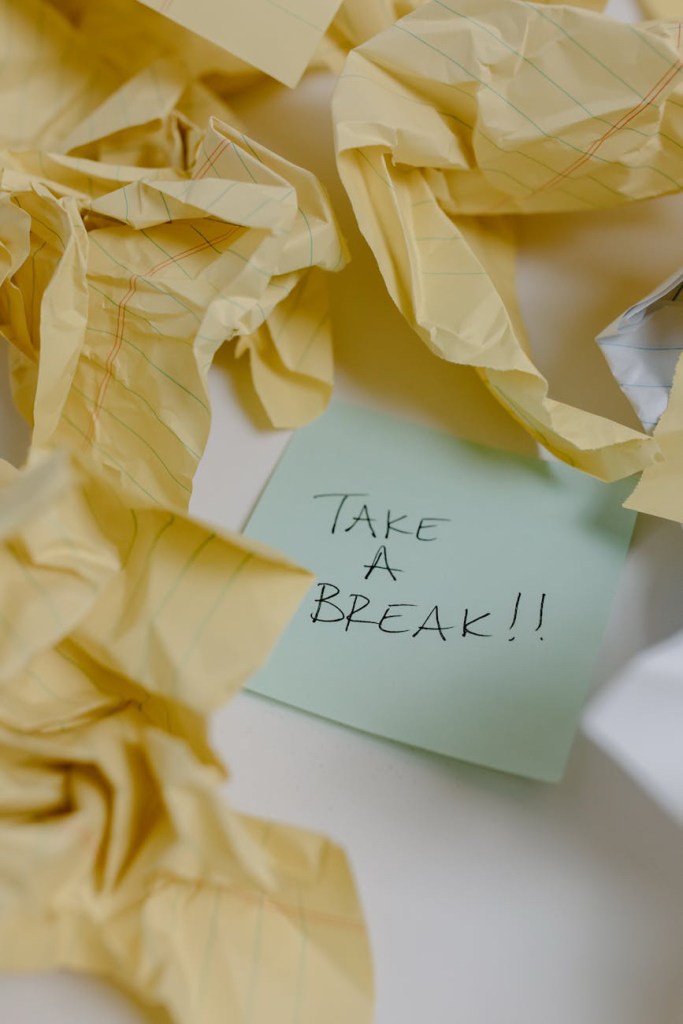
4. Set a “hard stop” each day
Since your office is often wherever your phone is, it’s easy to work 24/7. To beat burnout, you need a daily ritual to clock out. It could be closing your laptop at a specific time, going for a quick walk, or even just changing your clothes. This tells your brain that work is over. Giving yourself permission to unplug actually makes you sharper and more creative when you jump back in tomorrow.
Remember, you are the most important asset your business has. Taking care of your stress levels isn’t “extra” work—it’s part of the job.
What are you doing to relieve stress in your small business?
 My writing booth.