
Conjunctions are the glue that hold our thoughts together. These small but mighty words—like and, but, or, because and although—help us link ideas, contrast opinions and explain reasons. Without them, our sentences would be short, choppy and disconnected. Imagine trying to write a story or make a persuasive argument without ever connecting your thoughts. Chaos!
There are three main types of conjunctions in English:
1. Coordinating conjunctions — FANBOYS
These are the most familiar: for, and, nor, but, or, yet, so—often remembered by the acronym FANBOYS. They connect words, phrases or clauses of equal importance:
- “I wanted tea, but I drank coffee.”
- “She sings and dances.”
2. Subordinating conjunctions
These introduce dependent clauses and show relationships like cause, time or condition:
- “I stayed home because it was raining.”
- “Although he was tired, he kept working.”
Subordinating conjunctions help us express nuance. They let us explain why something happened, under what conditions, or despite what obstacle.
3. Correlative conjunctions
These come in pairs and work together: either…or, neither…nor, not only…but also.
- “Either you start now, or you’ll miss the deadline.”
- “She’s not only smart, but also kind.”
These add rhythm and emphasis, making your writing more dynamic.
Why conjunctions matter
Conjunctions aren’t just grammatical tools—they’re emotional bridges.
They help us express contrast (but), possibility (or) and connection (and). In storytelling, they shape pacing and tone. In persuasive writing, they clarify logic and strengthen arguments.
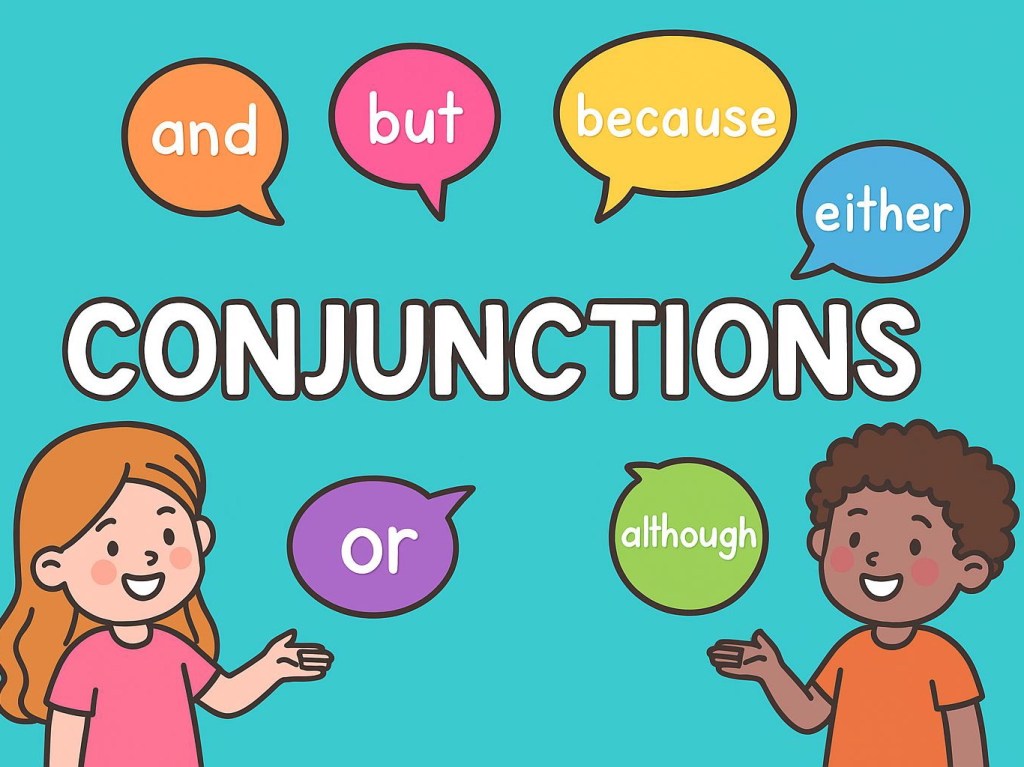
Want to sound more fluent and natural? Mastering conjunctions is key. They’re the difference between “I like pizza. I like pasta.” and “I like pizza and pasta.” One sounds robotic; the other sounds human.
So next time you write, don’t overlook these tiny connectors. They may be small, but they carry big meaning.
 My writing booth.