
If a picture paints a 1000 words, imagine what a prototype can do.
A prototype is a representation of the product you want to sell. It helps you explain how your product will function and look.
A representation of your product is one way to explain what your product is or how it functions. It turns the idea from descriptive words into a useful visual. This can be done using 3-D digital graphics or by creating a physical representation you can touch, hold and try.
Creating a model has a number of benefits.
- It can help you validate your idea, giving you a sense of confidence that your vision will actually work.
- You’ll be able to see how pieces fit and work together. Do they work the way you intended?
- A prototype is an asset for usability testing allowing you to adjust and refine your product along the way.
- You’ll be able to use your prototype when you’re pitching to prospective buyers and it will help you get into the market faster than a drawing on paper.
Pulling together a prototype or a representation of your product can be a fun and valuable experience. It’s also a very helpful guide when it comes time to manufacture your product.
Lessons learned
Last year, we created a prototype for a new tabletop game. We were fortunate in that the majority of our components were paper based — a box, a writing pad, instructions and cards. Using simple coloured paper, scissors and glue, we created our pieces and applied our copy and visual branding. We were able to source a box from an online supplier who promoted box templates and design services. We then purchased our last two plastic components from a local stationery store.
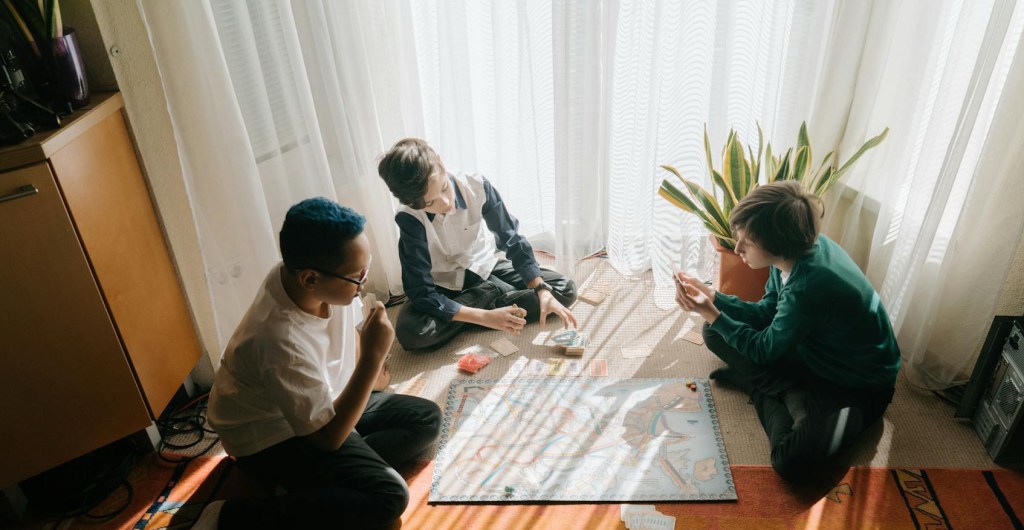
Pulling the pieces together at very little expense gave us a prototype we could use for our testing.
(Note, our first round of testing without a prototype was a challenge to explain but still gave us feedback on the copy.)
Here’s what we learned.
Our box was too big. Twice the size too big. We had more cards than we needed to play the game. We also received feedback on the content of the game, along with the visual appearance of the box. Every bit of feedback was valuable in getting us to a final product we were happy with.
Walk before you run
Product creators will go through many renditions before landing on a final version. The lessons learned allowed us to refine our prototype until we were happy with the final result.
Take the time to create your prototype and test it before ordering additional copies. Walk before you run and save money. You’ll also save space in your storage room! 😉
 My writing booth.